

Explore the vast array of wild species to be found across the UK
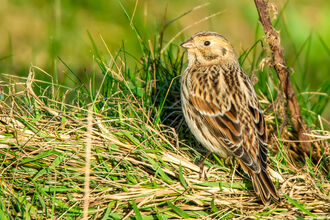
Lapland bunting
This handsome bunting is a scarce winter visitor, mainly to the east coast of England and Scotland.

Mackerel
Mackerel are a sign of summer's arrival, when they appear inshore in huge numbers all around the UK. As well as being a sustainable…

Beadlet anemone
Have you ever seen those dark red jelly blobs whilst rockpooling? These incredible creatures are beadlet anemones! They live attached to…

Water-soldier
Water-soldier grows submerged in ponds and open water, and pops up over summer, looking like the top of a pineapple! This rare plant…
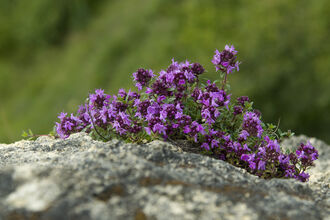
Wild thyme
The delightful fragrance of wild thyme can punctuate a summer walk over a chalk grassland. It forms low-growing mats with dense clusters…
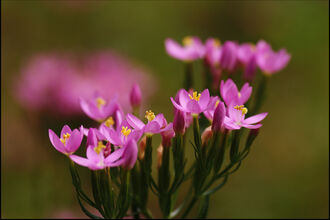
Common centaury
A low-growing plant of sand dunes, heaths and grassy places, common centaury is in bloom over summer. Look for clusters of pretty, pink…
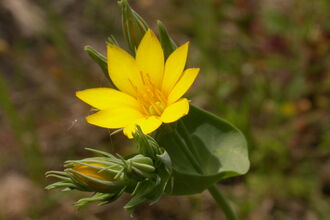
Yellow-wort
A plant of chalk and limestone grasslands and sand dunes, yellow-wort has butter-yellow flowers. Its distinctive leaves sit opposite…

Fennel
Fennel has feathery leaves and open, umbels of yellow flowers. It was probably introduced by the Romans for culinary use, and is now a…
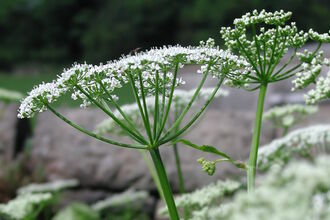
Ground-elder
Ground-elder was likely introduced into the UK by the Romans and has since become naturalised. A medium-sized umbellifer, it is an…
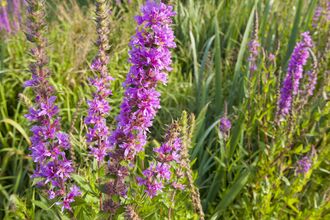
Purple-loosestrife
A tall plant, purple-loosestrife can form dense stands of bright purple flower spikes in wet habitats like reedbeds, fens and marshes.…
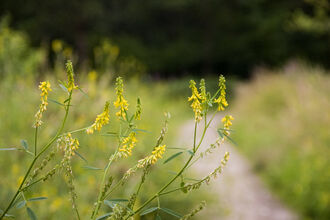
Tall melilot
Tall melilot was introduced into the UK as a fodder crop, but has now become naturalised. It displays golden, pea-like flowers on tall…
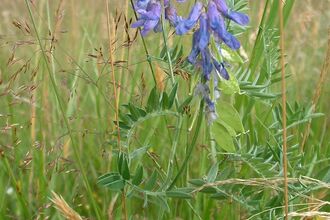
Tufted vetch
A scrambling plant, tufted vetch has violet flowers. It is a member of the pea family and can be seen along woodland edges, on scrubland…


